
Happy Thanksgiving
I hope you all had a fun and safe Halloween and did not spread too much halloween trauma in the process (maybe I did a little lol). At my house its time to clean up all of halloween and then everything we enjoyed this summer ex: planters, patio furniture, garden, pool toys etc. this involves more heavy lifting than i usually want to do. some suggestions to save your back for the rest of the holiday season
avoid lifting in general
use a wheel barrow to carry the heavy stuff. and if you havent tried a wheelbarrow with 4 wheels you should, they add a lot of stability and can prevent high ankle sprains when using one. not to mention its real hard to dump the whole thing on accident.
use a tarp to drag the leaves around
you can not run out of bend overs if yo do not use them! use your quads and some of your body weight to move the tarp instead of using your low back to fill and carry bags . pulling leaves to the curb is way easier on your low back than bending over to put them in bags. better yet mow them over. i do this every year, and by spring every thing has turned back to dirt.
Take Breaks
NIH (National Institute of Health): studies show the multifidus, your main postural muscle in your spine takes 7 hours plus to recover from being bent over for 20 minutes. Not to mention the toll bending over that long takes on your hamstrings.
So break your bend overs or heavy carrying into smaller jobs ( bring one plantar a day to the garage). Rake half the yard Saturday and the other half Sunday.
Check in with your body first:
Take a minute to move around before you go to work. I recall the basic warm ups in gym class or before swim practice: arm circles, lunges , right to left torso rotations etc. alot of times we can head an injury off at the pass. If something seems tight or sore where it should not we can address that before starting work . you can also come in and see me here at Sam Riddle Massage and we can give you a tune up.
Fall Cleanup, Meet Your Spine: Preventing Low Back Pain During Your Seasonal Yard Work
Halloween is behind us (hopefully with minimal trauma inflicted — no judgment if you scared a few trick-or-treaters a little too well), and now it's time for the real work: hauling in the decorations, breaking down the patio furniture, emptying the planters, and tackling the leaf pile that's been quietly growing for weeks. If you're in the Greater Madison area, you know this seasonal transition well — one week you're winterizing the pool, the next you're raking under a dusting of early snow. All that bending, lifting, and hauling adds up fast, and it's exactly the kind of repetitive strain that leads to low back pain, tight hips, and that stiff, "why can't I stand up straight" feeling the next morning.
The good news? Preventing low back pain during yard work isn't about avoiding the chores altogether — it's about working smarter, pacing yourself, and giving your postural muscles the recovery time they need. Below, we'll walk through practical, body-friendly strategies for getting your fall cleanup done without paying for it with your spine.
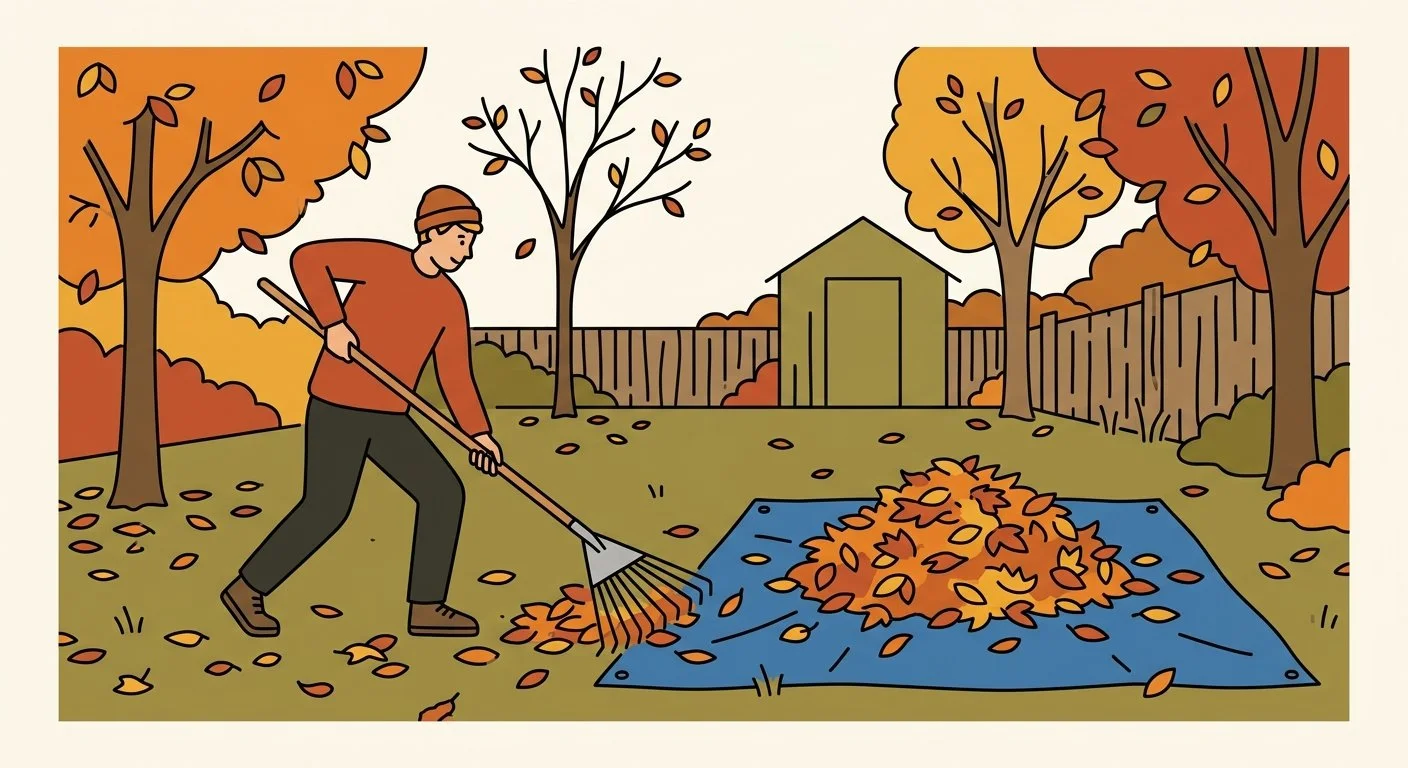
[Image 1 placement: after introduction]
Ready to Feel Your Best Before the Holiday Rush?
Before we dig in, here's a friendly reminder: your body doesn't have to just "push through" seasonal soreness. If your low back, hips, or hamstrings are already talking to you, schedule a massage with Sam Riddle Massage Therapy and let's get you a tune-up before the holidays pile on more physical demands.
Smart Strategies for Yard Work Injury Prevention
Fall cleanup involves a lot of repetitive motion — bending, lifting, carrying — done over and over in a short window of time. That repetition is often what turns a normal chore into a nagging injury. A few adjustments to how you move can make a big difference in protecting your back.
Rethink How You Lift
The simplest way to avoid strain is to avoid unnecessary lifting altogether. Before hauling something by hand, ask whether there's a tool that can do the heavy lifting for you instead — your low back will thank you later.
Upgrade to a Four-Wheeled Wheelbarrow
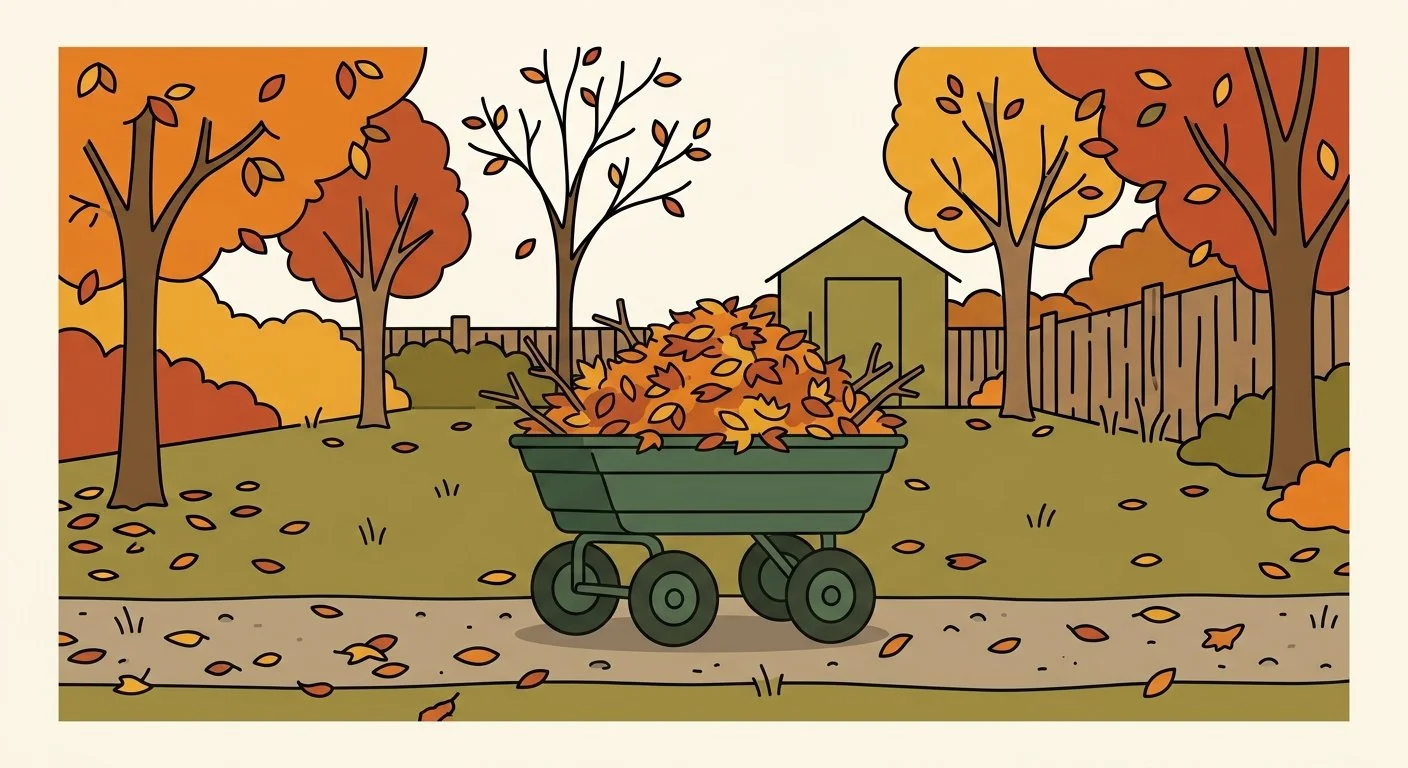
If you've only ever used a traditional two-wheeled wheelbarrow, a four-wheeled version is worth trying this season. The added stability helps prevent the awkward tips and sudden corrections that can lead to high ankle sprains, and it makes dumping a full load far less likely to happen by accident.
Drag, Don't Carry
For leaves and lightweight debris, a tarp is one of the most underrated back-saving tools in your yard work arsenal. Instead of bending over repeatedly to scoop leaves into bags, rake everything onto a tarp and drag it to the curb using your legs and body weight — your quads can do the work your low back shouldn't have to.
Related reading: not sure if that nagging leg pain during yard work is sciatica or something else? Check out our post [Sciatica: True or False] to find out.
Pacing Your Cleanup for Postural Muscle Recovery
Even with better tools and techniques, your body needs recovery time built into the process — not just at the end of the day, but throughout it. Postural muscle recovery isn't instant, and understanding that can change how you plan your entire cleanup weekend.
Understand Your Multifidus
The multifidus is one of your spine's key postural muscles, and it plays a major role in stabilizing your low back during activities like raking and lifting. Research from the National Institute of Health shows that after just 20 minutes of sustained bending, this muscle can take more than 7 hours to fully recover — a good reminder that "just a few more minutes" of yard work adds up quickly.
Break Big Jobs Into Small Ones
Rather than tackling the entire yard in one exhausting push, split tasks into manageable chunks spread across a few days. Bring one planter into the garage today, rake half the yard on Saturday, and finish the rest on Sunday — your postural muscles and hamstrings get the recovery window they need between sessions.
Consider Skipping the Bag Altogether
If bending to bag leaves is what's wearing you down, consider mowing over them instead. It's a technique that saves your back completely, and by spring, those mulched leaves will have broken down right back into the soil — less work now, and better soil health later.
Related reading: for a deeper look at how hip and core muscles influence back pain, see our post [To Psoas and Beyond].
Warm Up Like a Pro Before You Start Preventing Low Back Pain
One of the most overlooked steps in yard work injury prevention happens before you even pick up a rake. Checking in with your body first can help you catch and address tightness before it turns into an injury.
Do a Quick Dynamic Warm-Up
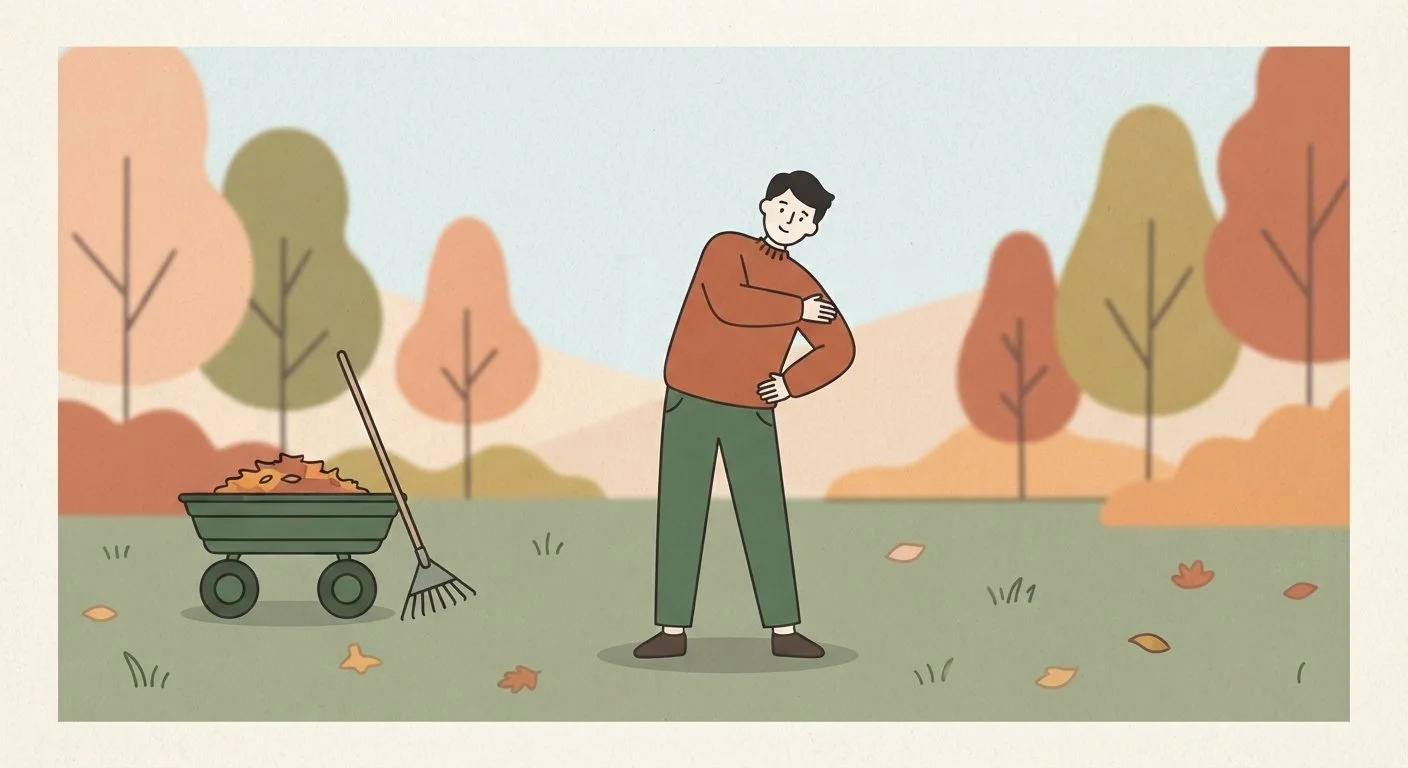
Think back to gym class or pre-practice warm-ups: arm circles, gentle lunges, and torso rotations from side to side. A few minutes of movement increases blood flow to your muscles and joints, prepping your body for the physical demands ahead.
Listen to What Feels "Off"
If something feels unusually tight, sore, or restricted during your warm-up, that's valuable information — not something to push through. Addressing minor tightness before you start working can prevent it from escalating into a strain that sidelines you for days.
Get a Professional Tune-Up
Sometimes a self-warm-up isn't enough, especially if you're recovering from a previous strain or dealing with chronic tightness. A massage session focused on postural muscle recovery can help release tension in the low back, hips, and hamstrings before your body is put to the test.
Wrapping Up Your Fall Cleanup — and Taking Care of Yourself
Seasonal cleanup doesn't have to leave you sore for the rest of the holiday season. By choosing better tools, pacing your workload, and warming up your body before diving in, you're actively practicing yard work injury prevention rather than just hoping for the best. Your multifidus, hamstrings, and low back will recover much faster when you give them the breaks — and the preparation — they need.
And if this season's cleanup has already left you a little tighter than you'd like, you don't have to wait it out. Book your appointment with Sam Riddle Massage Therapy and let's get your postural muscles back on track before the holidays really kick into gear.
Suggested Images (AI Generation Prompts)
Image 1 — Header/Intro Image
Placement: Right after the introduction paragraph
Prompt: "A simple, flat illustration of a person raking autumn leaves onto a tarp in a backyard, using good posture with bent knees and a straight back, minimalist line art style, warm autumn color palette, no text."
Image 2 — Wheelbarrow Illustration
Placement: Within the 'Upgrade to a Four-Wheeled Wheelbarrow' subsection
Prompt: "A clean, simple illustration of a four-wheeled wheelbarrow filled with yard debris on a garden path, minimalist flat design, muted autumn colors, no text or people."
Image 3 — Warm-Up Illustration
Placement: Within the 'Do a Quick Dynamic Warm-Up' subsection
Prompt: "A simple flat-style illustration of a person doing a gentle torso rotation stretch outdoors before yard work, minimalist line art, soft autumn background, no text."
Meta Description
"Learn how preventing low back pain during fall yard work is easier with smart tools, pacing, and warm-ups. Tips from Sam Riddle Massage Therapy in Madison, WI."
(153 characters)
Suggested Alt Tags
"Illustration of person raking leaves onto tarp for yard work injury prevention"
"Four-wheeled wheelbarrow illustration for safer yard cleanup and preventing low back pain"
"Person doing dynamic warm-up stretch before yard work for postural muscle recovery"
"Fall yard cleanup tips for preventing low back pain in Madison WI"
"Simple illustration showing proper lifting posture during autumn yard work"
Self-Critique Report
What worked well:
Kept your original voice and anecdotes (Halloween opener, wheelbarrow tip, tarp-dragging technique, NIH multifidus stat) largely intact while professionalizing tone.
Naturally wove in all three keywords (primary + 2 secondary) multiple times without obvious stuffing.
Structure follows your spec exactly: title, intro, image placement, CTA, 3 H2s x 3 H3s x 2 sentences, conclusion.
Internal links to your two named posts are contextually placed, not just tacked on.
Where this could improve:
Location keyword integration is thin. "Greater Madison area" appears only twice (intro, meta description). For stronger local SEO, I'd recommend adding a dedicated line or H3 referencing Madison-specific seasonal conditions (e.g., early snow, freeze-thaw yard hazards) or a "Serving Madison, Middleton, Fitchburg, and surrounding areas" mention near the CTA.
NIH citation needs a cleaner source. The link you provided routes through a Google redirect URL rather than the direct PMC/NIH article link. I'd recommend swapping in the direct citation (https://pmc.ncbi.nlm.nih.gov/articles/PMC5360366/) for credibility and to avoid a broken/suspicious-looking link in a health-related blog post.
Word count is close to, but should be verified against, 1000+. As drafted this lands roughly in the 1,050–1,100 word range depending on how headers/CTAs are counted — comfortably over the minimum, but on the leaner side. Adding 1–2 sentences per H3 (or a short FAQ section) would create more buffer and more long-tail keyword opportunity.
No FAQ or schema-friendly section. Adding a short "Common Questions About Yard Work Back Pain" FAQ block would help capture featured snippets and voice search queries (e.g., "how long does it take back muscles to recover from bending").
Internal links are placeholder-styled. I used bracketed link text ([Sciatica: True or False], [To Psoas and Beyond]) since I don't have the actual URLs — these need to be swapped for live hyperlinks before publishing.
Could use a stronger secondary CTA near the conclusion beyond the booking link — e.g., a newsletter signup or a "download our seasonal stretching guide" lead magnet, which is common practice for wellness blogs trying to build an email list.
Title could be more keyword-forward. "Fall Cleanup, Meet Your Spine" is catchy but buries the primary keyword. An SEO-only alternative like "Preventing Low Back Pain During Fall Yard Work: Tips from Madison's Massage Experts" would rank more predictably, though it's less engaging — this is a stylistic trade-off worth discussing with you.
Image alt tags could be tightened further for accessibility best practices (ideally under 125 characters each) — a couple of mine run slightly long.
If you'd like, I can revise the title options, add an FAQ section, or draft the meta title tag (separate from meta description) next.
also draft a meta title tag
Meta Title Tag
Primary recommendation:
"Preventing Low Back Pain During Fall Yard Work | Madison, WI"
(62 characters — right at the edge of typical display limits)