
IT’s SPOOKY TIME !!!

Low Back Pain After Yard Work? How to Protect Your Back, Hamstrings, and Shoulders
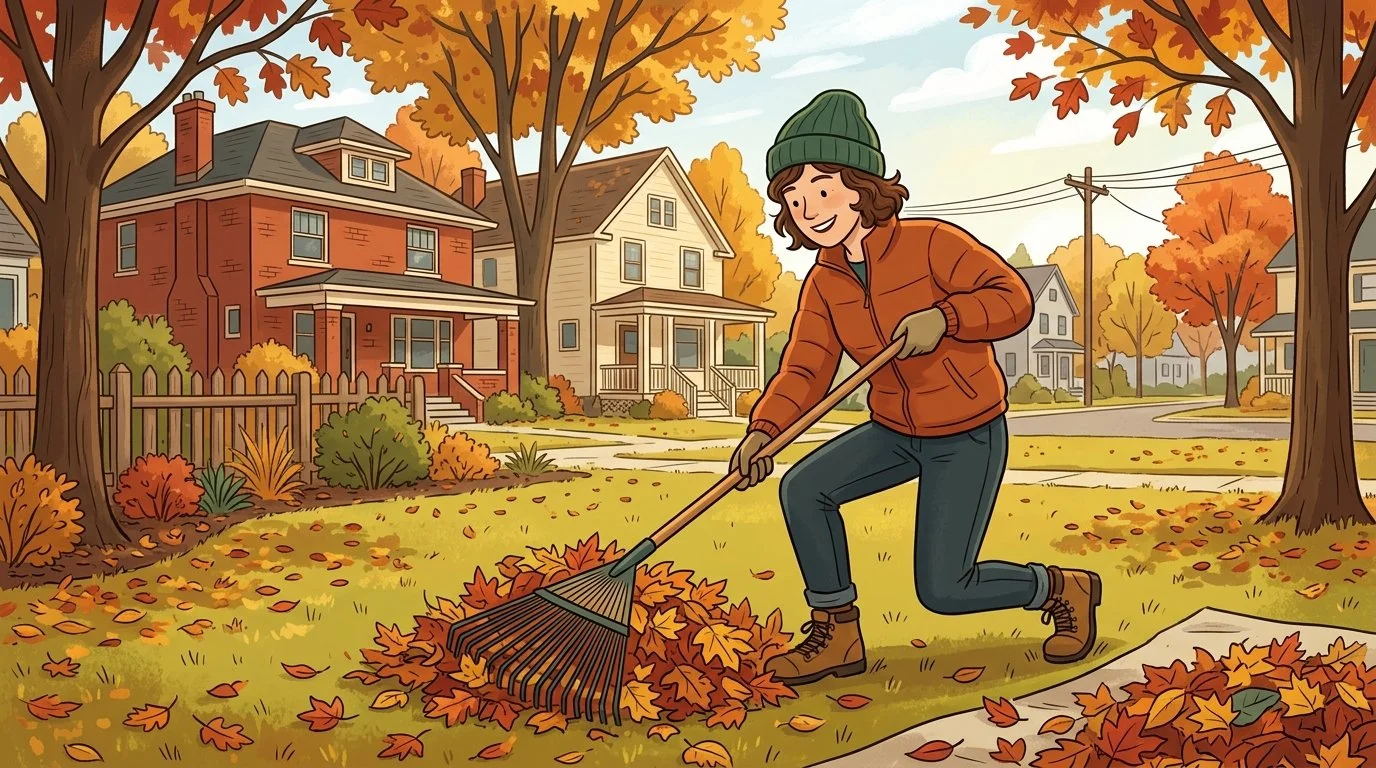
Fall in Madison, Wisconsin, is one of my favorite times of year. The air gets crisp, the leaves put on their annual show, and eventually, every single one of them seems to decide that your yard is the perfect place to land. Then comes the raking, bagging, bending, lifting, twisting, and carrying. Before long, that relaxing Saturday afternoon of yard work can turn into a Sunday morning wrestling match with your low back.
If you have ever finished raking leaves and thought, “Well, I guess I won't be standing normally for a few days,” you are not alone. Yard work can place a surprising amount of stress on the muscles that support your spine, particularly when you spend a long time bent over or repeat the same movement hundreds of times.
The good news is that a little attention to body mechanics can go a long way toward reducing unnecessary strain and helping you avoid low back pain. Whether you're a student, teacher, desk professional, or simply someone who spends most of the week sitting and then tackles the entire yard on Saturday, your body may need a little preparation before you ask it to become a professional landscaper.
Why Yard Work Can Trigger Low Back Pain
Yard work looks simple enough. Pick up the rake, bend down, gather the leaves, put them in a bag, lift the bag, carry it away, and repeat until the yard is clean—or until your back files a formal complaint.
The problem isn't necessarily one particular movement. More often, it is the combination of repetitive movements, awkward positions, fatigue, and doing far more work than your body is accustomed to doing.
Bending for long periods
One of the biggest challenges during yard work is spending extended periods with your torso bent forward. When you stay in that position, the muscles supporting your spine have to work continuously to help stabilize you. Your multifidus muscle , a main postural muscle can take 7 plus hours to fully recover after only 20 minutes of bending over!
This is especially important for people who spend their weekdays sitting at a desk, because going from hours of relatively stationary work to several hours of repetitive bending is a pretty dramatic change in demand.
Repetition adds up
One bend probably isn't going to ruin your weekend. The problem is doing the same bend 200 times while raking, filling bags, pulling weeds, or picking up branches.
Your body doesn't necessarily care that each individual movement feels easy; it cares about the total workload. When muscles become fatigued, your technique can change, and movements that felt effortless earlier in the day may start placing considerably more stress on your back and other muscles.
Your hamstrings may join the argument
Your hamstrings can also play an important role when you're repeatedly bending forward. If you're not used to that workload, they may become tight, sore, or fatigued.
That doesn't mean every episode of hamstring soreness is a hamstring injury, but it is a good reason to pay attention when your body starts telling you that you've had enough. A little discomfort is a reason to modify what you're doing—not necessarily a challenge to see how much more work you can finish.
Better Yard-Work Mechanics Can Save Your Back
You don't have to avoid yard work to protect yourself from low back pain. In many cases, the better strategy is to change how you approach the job.
Think of your yard cleanup as a workout. You wouldn't walk into a gym after months away and immediately attempt hundreds of repetitions, so it makes sense to give your body the same consideration when tackling the leaves.
Bend your knees and use your legs
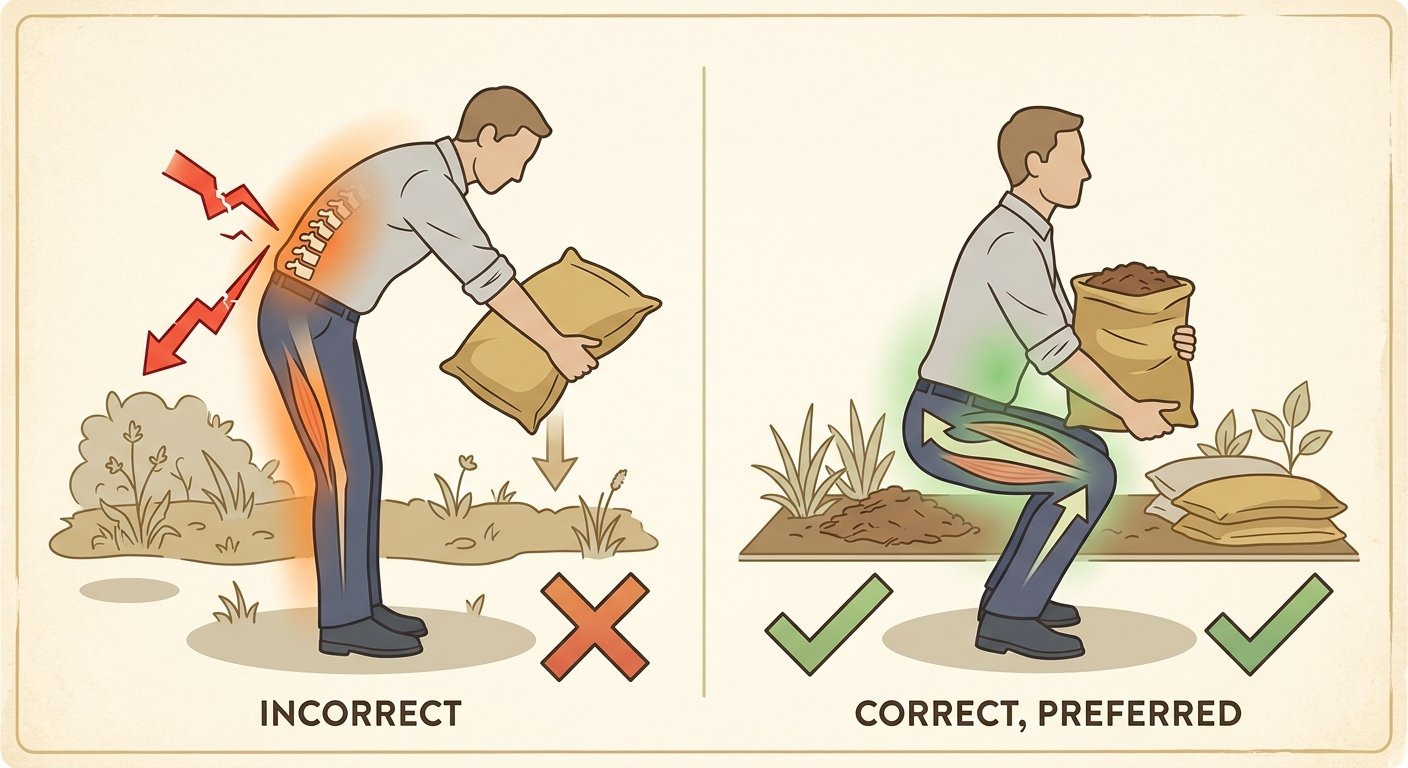
Yes, it is the classic advice: bend your knees instead of repeatedly folding at the waist. It may sound cliché, but there is a reason this advice has survived for generations.
When you need to pick something up from the ground, get closer to it, bend through your hips and knees, and use your legs to help you rise. You don't have to perform a perfect squat every time you pick up a leaf, but avoiding repeated deep forward bending can make the job more manageable for your back.Change positions frequently
If you've been raking in the same position for 30 minutes, your body may be ready for a change long before your yard is.
Switch tasks, straighten up, walk around, drink some water, and give your muscles a brief break. You can also work at ground level when practical rather than constantly reaching forward and bending from the waist.
Don't make your Saturday harder than it needs to be
One of the easiest ways to overdo yard work is to decide that everything must be finished in one marathon session. Unfortunately, your muscles may not share your enthusiasm for completing the entire project before lunch.
Break large jobs into smaller sections. Work for a while, take a break, and come back to it later. If your back, hamstrings, neck, shoulders, or arms are becoming increasingly uncomfortable, that's useful information—not an invitation to keep pushing.
Protect More Than Just Your Low Back
When people think about yard work injuries, they often focus immediately on the lower back. But repetitive outdoor work can affect several other areas, particularly when you spend hours gripping tools, reaching, lifting, and carrying.
Don't forget your forearms
Raking and gripping gardening tools can place significant repetitive demand on the muscles of your hands and forearms. If you're squeezing the handle tightly for hours, you may eventually noticefore arm pain or fatigue.
Try relaxing your grip when you can and alternate tasks when possible. If your forearms are already sore, giving them time to recover may be much more productive than trying to power through another pile of leaves.
Your neck and shoulders work too
Raking often involves looking down, reaching forward, and repeatedly pulling the rake toward your body. Combine that with the hours you may already spend looking at a computer or phone, and your neck and shoulders may get very little opportunity to relax.
That combination can contribute to neck and shoulder pain, particularly when you're tired and begin holding tension in your upper body. Changing your posture, taking regular breaks, and varying your movements can help reduce the repetitive load.
Know when your body is asking for help
Muscle soreness after an unusually active day isn't necessarily a reason to panic. However, persistent, worsening, or significant pain deserves attention rather than being ignored.
If pain is interfering with normal activities, keeps returning, or concerns you, consider discussing it with an appropriate healthcare professional. Massage therapy may also be useful as part of a broader approach to managing muscular tension and supporting recovery.
Yard Work and Your Desk Job Have More in Common Than You Think
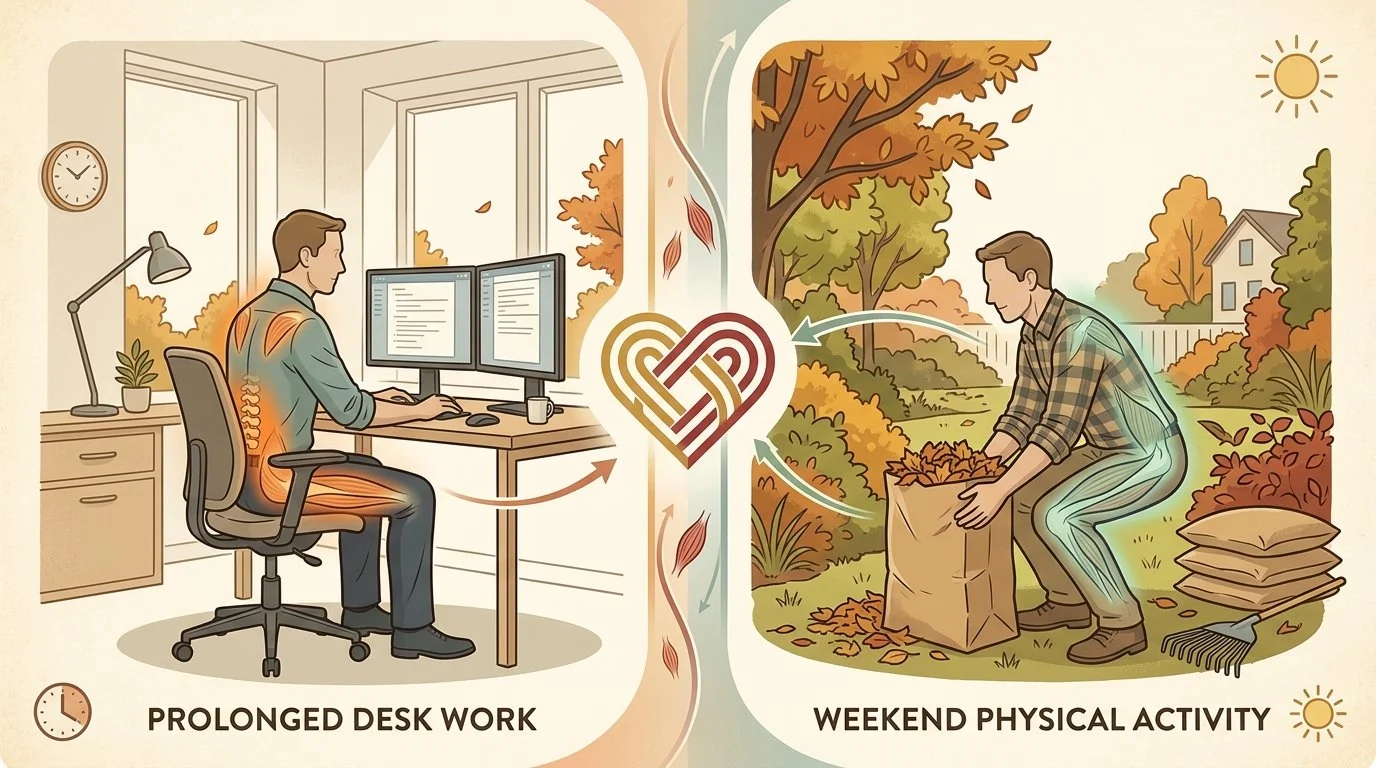
There is an interesting connection between sitting at a desk all week and working in the yard all weekend. Both can involve staying in relatively repetitive positions for extended periods, even though the activities seem completely different.
A student may spend hours studying, a teacher may spend much of the day grading or preparing lessons, and a professional may spend most of the workday at a computer. Then Saturday arrives, and suddenly the body is expected to rake, lift, bend, twist, and carry for several hours.
Your weekend doesn't erase your weekday habits
If your body is already feeling stiff after a long workweek, yard work can expose those limitations pretty quickly. The muscles that tolerated sitting all week may not be thrilled when they're suddenly asked to stabilize your body through hundreds of bending and lifting movements.
This is one reason maintaining movement throughout the week can be helpful. Regular walks, changes in position, and appropriate strengthening or mobility work can make the transition from desk to yard less dramatic.
Low back pain isn't always as simple as it seems
When your back hurts, it's tempting to assume that the painful spot automatically tells you what the problem is. Unfortunately, the human body is more complicated than that, and discomfort can sometimes involve surrounding muscles, joints, nerves, or other structures.
For example, not every pain that travels into the leg automatically means you have sciatica. Understanding the difference can help you make better decisions about what to do next. sciatica true or false
Internal link opportunity: Link the phrase “not every leg pain is sciatica” to the blog “Sciatica: True or False?” This is a strong contextual internal link because readers experiencing back or leg discomfort may naturally want to understand whether their symptoms could be related to sciatica.
Sometimes your muscles need more than rest
If your muscles remain tight or uncomfortable after you've finished the yard work, simply waiting for the problem to disappear isn't always the only option. Massage therapy can be one way to address muscular tension and help support recovery.
At Sam Riddle Massage Therapy, the goal is to look beyond simply rubbing the area that hurts and work toward identifying muscular sources contributing to your discomfort. For Madison-area students, teachers, desk professionals, and anyone else dealing with the physical demands of daily life, that can be an important part of getting back to doing the things you enjoy.
How Sam Riddle Massage Therapy Can Help
Yard work should leave you with a clean yard—not a week-long reminder that you own a rake.
If you've pushed your body a little too hard, massage therapy may help address muscular tension and soreness so you can get back to your normal activities. Sam Riddle Massage Therapy focuses on addressing pain at its source and providing targeted, effective care rather than simply chasing the location where you feel discomfort.
Don't wait until you're completely miserable
There is a tendency to ignore discomfort until it becomes impossible to ignore. You don't have to wait until your back, hamstrings, forearms, or shoulders are screaming for attention before you do something about it.
Paying attention early can help you make smarter decisions about activity, recovery, and when professional care may be appropriate.
Give your body a chance to recover
Recovery is part of the work. Taking breaks, getting adequate rest, moving regularly, and paying attention to changes in your symptoms can all help you manage the physical demands of yard work.
And if your muscles need some additional attention after you've spent the weekend battling the leaves, Sam Riddle Massage Therapy is here to help you get back on track.
Ready to get back to moving comfortably?
If yard work has left you dealing with low back pain, a sore hamstring, forearm discomfort, or neck and shoulder tension, don't let the leaves win.
Conclusion
Fall yard work doesn't have to end with you spending the next several days negotiating with your low back. By changing positions, bending with your legs, taking regular breaks, varying repetitive tasks, and paying attention to early signs of fatigue, you can make yard cleanup easier on your body. And remember, the same body mechanics that help protect you while raking leaves can also matter during the rest of your week—especially if you spend hours sitting at a desk. If you've already overdone it and you're dealing with persistent muscular discomfort, Sam Riddle Massage Therapy can help you address the source of the problem and get you moving toward feeling like yourself again.