
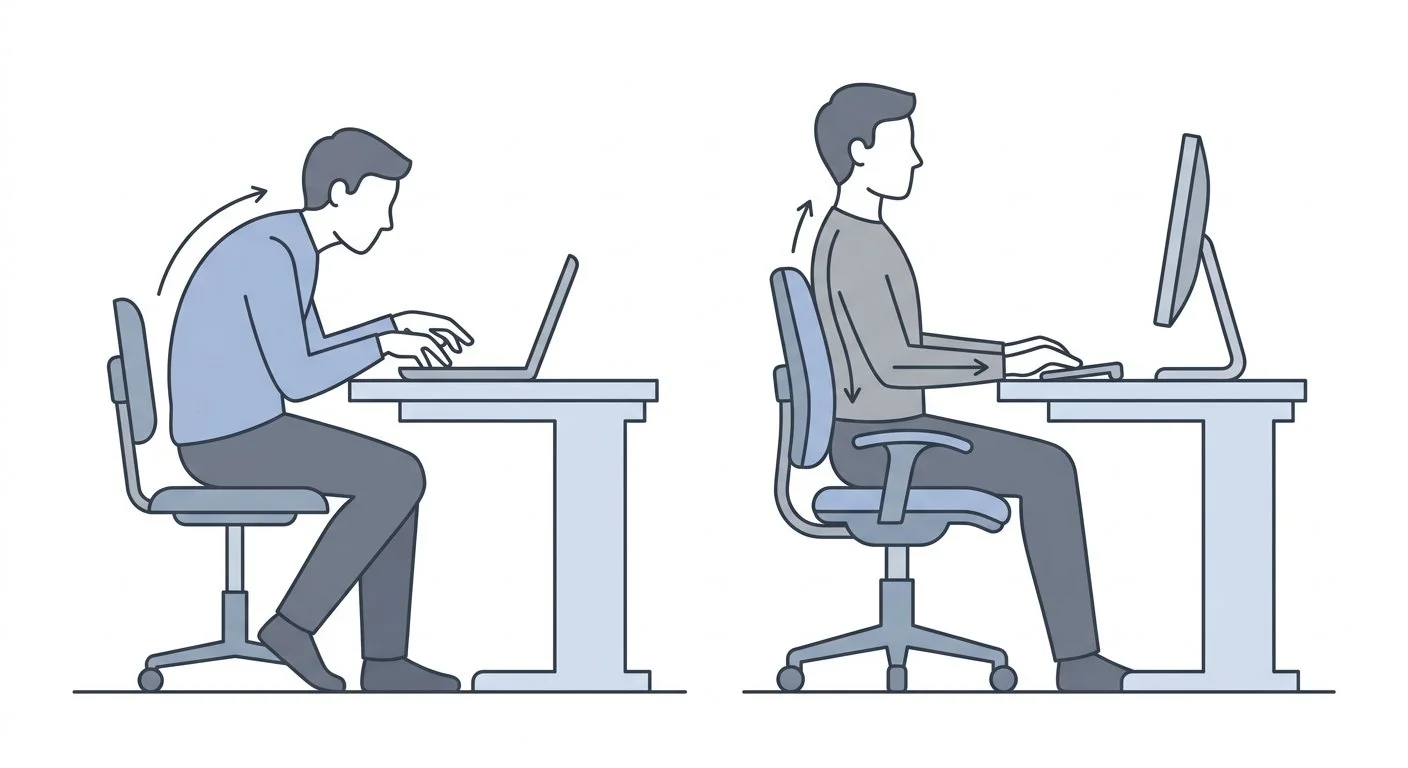
Computer back
Struggling with neck and back pain from long hours at the desk? learn how posture causes head aches, numbness and shoulder tension, and how Sam Riddle Massage therapy in Madison Wisconsin can help.
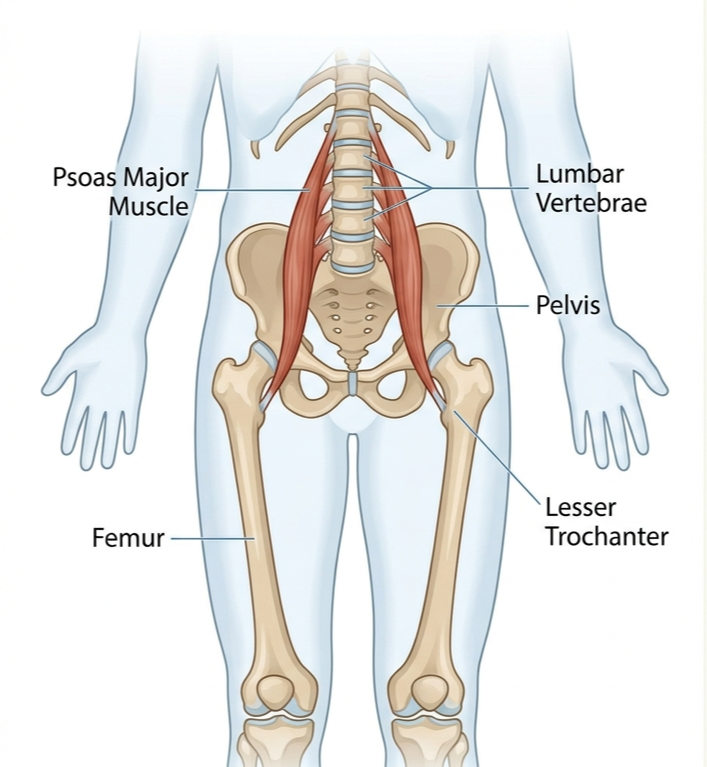
To Psoas and beyond………..
pelvic muscles and ligaments. Static loading — holding the same position for hours — encourages certain muscles to remain shortened while their opposites stay lengthened and underused. Repeated micro-adjustments of posture also train the nervous system to favor those compensatory patterns, making them more automatic even when you stand or move.
Other office-related factors that contribute
Asymmetrical habits: leaning to one side while seated, perching on one hip, or consistently reaching to one side for a mouse or phone can produce side-to-side imbalances.
Chair and desk setup: seats that lack adequate support or desks set at an inappropriate height shift how the pelvis is supported and how the spine stacks.
Commuting and luggage: driving or carrying a bag regularly on the same shoulder reinforces unilateral loading patterns.
Stress and breath: shallow, chest-dominant breathing and chronic stress increase tension through the front of the body, including structures that influence pelvic positioning.
How imbalance progresses to chronic symptoms Early on, pelvic asymmetry may show as intermittent stiffness or localized discomfort that resolves with rest. Without change, the body adapts: joints above and below the pelvis (lumbar spine, hips, and even the thoracic region) start taking on abnormal motion patterns. Muscle groups tasked with stabilizing the pelvis—glutes, deep hip rotators, the pelvic floor, and core stabilizers—may stop coordinating effectively. This loss of coordinated control increases mechanical stress on joints and soft tissues, promoting inflammation, degenerative changes, and persistent pain that is harder to resolve.
What to look for in assessment and care When seeking evaluation, look for clinicians who assess more than just the low back. Useful elements of a thorough assessment include observation of standing and seated posture, gait analysis, palpation for asymmetry in bony landmarks and muscle tone, and tests of how the pelvis moves with lunging, squatting, or weight shift. Objective measures and clear documentation of side-to-side differences are important so progress can be tracked.
Treatment priorities that matter (without promising a single “fix”)
Restore balanced loading: interventions should aim to normalize how weight passes through the pelvis in standing and sitting.
Reduce guarding and chronic tissue tension: hands-on approaches and modalities can help downregulate protective muscle tightness and improve tissue mobility.
Re-establish coordinated stabilization: care should focus on retraining the nervous system and muscles to work together so movement is efficient and protected.
Address contributing factors in the workspace and daily routines: modifying how you sit, where you place frequently used items, and how you commute can remove ongoing drivers of imbalance.
Monitor and adjust: because pelvic imbalance is multifactorial, care plans should be individualized and altered as patterns change.
When to seek help Persistent or progressive pain, frequent shifts in which side hurts, or symptoms that interfere with work and sleep warrant an assessment. Early attention can prevent compensations from becoming more entrenched and reduce the likelihood of secondary problems in the hips or spine.
If you work at a desk and are noticing the signs described here, a targeted evaluation can identify the specific ways your pelvis is being loaded and guide a care plan that focuses on lasting change rather than quick fixes.